How to Remove Oil Stains from Clothes: Expert Laundry Tips That Work
Oil stains are one of the most frustrating types of stains to remove from clothing. Whether you've spilled cooking oil while cooking, splashed engine oil while working on your car, or accidentally spilled greasy food on your favourite shirt, these stains can quickly soak into fabric fibres and become difficult to remove.
Unlike water-based stains, oil doesn't dissolve easily in water. Instead, it clings to the fabric, making ordinary washing less effective if the stain isn't treated properly. The good news is that acting quickly and using the right cleaning methods can significantly improve your chances of removing the stain completely.
If you're wondering how to remove oil stains from clothes, acting quickly and using the right cleaning method can make all the difference. Fresh oil stains are often easier to treat than dried ones, but every fabric requires the right approach. This article explains effective stain removal methods, fabric care tips, common mistakes to avoid, and when professional cleaning is the best solution.
Why Oil Stains Are So Difficult to Remove
Oil stains behave differently from many other household stains because oil naturally repels water. Instead of sitting on the surface of the fabric, it penetrates deep into the fibres, making it more challenging to lift during a normal wash.
The longer an oil stain remains untreated, the more difficult it becomes to remove. Heat from tumble dryers or ironing can also cause the stain to set permanently, making successful stain removal much harder.
Understanding why oil stains are so stubborn helps you choose the right treatment before placing your clothes in the washing machine.
How Oil Penetrates Fabric Fibres
When oil comes into contact with clothing, it quickly spreads through the tiny spaces between the fabric fibres. Materials such as cotton, denim, and wool absorb oil differently, while delicate fabrics like silk require even greater care.
Fresh oil stains are generally much easier to remove than dried ones. Treating the stain as soon as possible helps prevent the oil from bonding tightly with the fabric, improving the chances of complete removal.
Whether it's cooking oil stains, grease stains, or engine oil stains, early treatment is always the most effective approach.
Why Some Fabrics Hold Oil More Than Others
Not every fabric reacts to oil in the same way. Natural fibres like cotton absorb liquids quickly, while synthetic fabrics such as polyester may hold oil on the surface for longer. Delicate fabrics, including silk and wool, require extra attention because aggressive stain removal methods can damage the fibres.
Before treating any stain, always check the garment's care label. Following the recommended washing instructions helps protect the fabric while improving your chances of successful fabric stain removal.
What to Do Immediately After Getting an Oil Stain on Clothes
The first few minutes after an oil spill are often the most important. Acting quickly can stop the stain from spreading deeper into the fabric and make it much easier to remove later.
Blot the Excess Oil
As soon as the spill happens, Use a piece of clean kitchen roll or a soft cloth,l, tissue, or soft cloth to gently blot the affected area. Avoid pressing too hard, as this may push the oil further into the fabric. Blotting removes excess oil before it has time to soak deeper into the garment.
Avoid Rubbing the Stain
One of the biggest mistakes people make is rubbing the stain vigorously. Although it may seem helpful, rubbing often spreads the oil across a larger area and forces it deeper into the fabric fibres. Instead, gently dab the stain until no more oil transfers onto the cloth or paper towel.
Don't Use Heat Too Soon
Many people immediately place stained clothing into the washing machine and tumble dryer. This can actually make the problem worse. Heat causes oil to bond more firmly with the fabric, making the stain much harder to remove later. Always treat the stain first and check that it has completely disappeared before using a tumble dryer or iron.
How to Remove Oil Stains from Clothes
If you've been wondering how to remove oil stains from clothes, several simple household products can help. The best method depends on the type of fabric, the age of the stain, and the type of oil involved.
For the best results, treat fresh stains as quickly as possible.

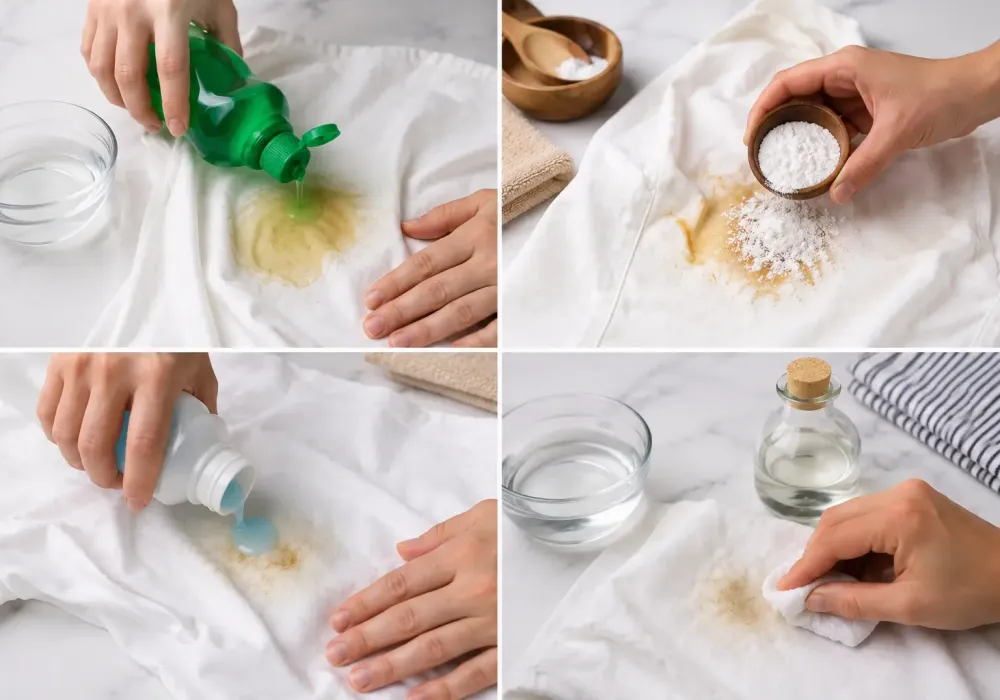
Method 1: Use Washing-up Liquid
Washing-up liquid is one of the most effective household products for removing grease because it is designed to break down oils.
Apply a few drops of dish soap directly onto the stain and gently work it into the fabric using your fingertips or a soft cloth.
Allow it to sit for around 10 to 15 minutes before rinsing with warm or cold water, depending on the garment's care instructions.
After rinsing, wash the garment as recommended on the care label.
This method works particularly well if you're trying to get oil out of clothes after food spills or everyday cooking accidents.
Method 2: Use Baking Soda or Cornflour
For fresh oil stains, baking soda and cornflour can help absorb excess grease before washing.
Sprinkle a generous amount over the stain and leave it for at least 30 minutes. For larger or heavier stains, leaving it overnight often produces better results.
Once the powder has absorbed the oil, gently brush it away before treating the remaining mark with liquid detergent or dish soap.
This technique is especially useful for grease stains and cooking oil stains on cotton clothing and denim.
Method 3: Apply Liquid Laundry Detergent
Liquid laundry detergent works well because it penetrates fabric fibres more effectively than many powder detergents.
Pour a small amount directly onto the stain and gently massage it into the fabric.
Leave it for 15 to 20 minutes before washing according to the garment's washing instructions. Always inspect the stain before drying the garment. If any trace remains, repeat the treatment instead of exposing the clothing to heat.
This is an excellent solution for people wondering how to remove grease stains from everyday clothing.
Method 4: Use White Vinegar (For Suitable Fabrics)
White vinegar can help lift light grease marks from some washable fabrics when used correctly.
Mix equal parts white vinegar and water, then gently dab the solution onto the stained area using a clean cloth.
Avoid using vinegar on delicate fabrics such as silk or wool unless the care label specifically recommends it. For premium garments or delicate materials, professional garment care is often the safest option.
How to Remove Oil Stains from Different Types of Clothing
The best stain removal method often depends on the type of fabric you're cleaning. While some materials can tolerate stronger cleaning products, others require a much gentler approach to avoid permanent damage.
Understanding how different fabrics react to oil and cleaning solutions helps protect your clothing while improving your chances of successful stain removal.
Cotton Clothing
Cotton is one of the easiest fabrics to treat because it can tolerate many common stain-removal methods.
Start by blotting the excess oil with a paper towel or clean cloth. Apply a few drops of dish soap or liquid laundry detergent directly to the stain and allow it to sit for around 15 minutes. Gently rub the fabric together before washing according to the care label.
If the stain remains after washing, repeat the process before placing the garment in the tumble dryer.
Denim and Jeans
Oil stains on jeans can usually be treated using baking soda followed by liquid detergent.
Sprinkle baking soda over the stain and leave it for at least 30 minutes to absorb excess oil. Brush away the powder before applying liquid detergent directly to the stain.
Wash the jeans using the recommended temperature shown on the care label. This method works well if you're trying to get oil stains out of pants or remove grease from denim clothing.
Silk Clothing
Silk requires much more careful handling than everyday fabrics.
Avoid rubbing the stain or applying harsh stain removers, as these can damage the delicate fibres and affect the fabric's natural shine.
If the care label allows, gently blot the stain and use a small amount of detergent formulated specifically for silk.
For designer garments, silk dresses, sarees, bridal wear, or clothing labelled "Dry Clean Only," professional dry cleaning remains the safest option.
Wool Garments
Wool naturally absorbs oils, making stains more difficult to remove if left untreated. Blot the stain immediately and avoid soaking the garment in hot water.
Because wool fibres can easily shrink or lose their shape, always follow the care label. Professional cleaning is often recommended for valuable wool garments with stubborn grease stains.
Polyester and Synthetic Fabrics
Polyester fabrics generally resist oil better than natural fibres, but stains can still cling to the surface if not treated quickly. Dish soap followed by liquid laundry detergent usually provides good results for fresh stains. Always check the stain before drying the garment, as heat can permanently set any remaining oil.
Common Mistakes to Avoid When Removing Oil Stains
Even the best stain removal products may not work if they're used incorrectly. Avoiding these common mistakes can greatly improve your chances of removing oil stains successfully.
Using Hot Water Too Early
Many people assume hot water will dissolve oil more effectively. In reality, using hot water before treating the stain may cause the oil to bond more firmly with the fabric.
Instead, remove as much oil as possible before washing and always follow the garment's care instructions.
Putting Clothes in the Dryer Before the Stain Is Gone
One of the biggest mistakes is drying clothes before checking whether the stain has completely disappeared. The heat from a tumble dryer can permanently set any remaining oil into the fabric.
After washing, inspect the garment carefully under good lighting. If you can still see the stain, repeat the treatment before drying.
Scrubbing Too Hard
Aggressive scrubbing can damage fabric fibres and spread the oil over a larger area.
Instead of scrubbing, gently blot the stain and allow cleaning products enough time to break down the oil naturally. This approach is much safer for both everyday clothing and delicate fabrics.
Ignoring the Care Label
Every garment comes with specific washing instructions. Ignoring these recommendations increases the risk of shrinkage, colour fading, or damage to delicate materials.
Always read the care label before applying any stain removal product or placing the garment in the washing machine.
When Should You Choose Professional Stain Removal?
While many fresh oil stains can be removed at home, some situations require professional expertise.
Professional cleaning is recommended if:
- The stain has already dried.
- The garment has been tumble dried after staining.
- Home treatments haven't removed the stain.
- The clothing is made from silk, wool, velvet, or other delicate fabrics.
- The garment has embroidery, sequins, or decorative embellishments.
- The item is expensive or has sentimental value.
Professional stain removal specialists like BandBox Laundry understand how different fabrics react to cleaning solutions and use techniques designed to remove stubborn stains while protecting the garment.
If you're unsure how to get oil out of clothes without causing damage, seeking professional help is often the safest decision.
When Professional Cleaning Is the Best Option for Removing Oil Stains from Clothes

If you're wondering how to remove oil stains from clothes but home remedies haven't worked, professional cleaning may be the best solution. Some oil stains simply require more than household cleaning products. Dried stains, delicate fabrics, and garments with stubborn grease marks often need specialist cleaning techniques to remove the stain safely without damaging the fabric.
If you're living in Manchester and looking for a professional dry cleaning or laundry service to help remove stubborn oil stains from your clothes, you've come to the right place. At BandBox Laundry, we don't just clean your clothes—we provide expert stain removal services designed to restore the appearance of your favourite garments while protecting delicate fabrics.
Our experienced team carefully assesses every garment before selecting the most suitable cleaning method. Whether you're dealing with cooking oil stains, grease marks, engine oil stains, or stains that haven't come out after home treatment, we use professional cleaning techniques to help remove stubborn stains while preserving the quality of the fabric.
Professional cleaning is especially recommended for garments made from silk, wool, linen, designer clothing, wedding wear, and other delicate fabrics, where incorrect stain removal methods can cause permanent damage.
To make the process even more convenient, BandBox Laundry offers free collection and delivery across Manchester within 48 hours, with same-day service available for selected orders. This means you can have your stained garments professionally cleaned without the hassle of visiting a laundry shop.
If your favourite clothing still has an oil stain after trying home remedies, let the specialists at BandBox Laundry help restore it with professional care and expert stain removal.
Frequently Asked Questions
Can old oil stains be removed from clothes?
Yes, old oil stains can often be removed, although they usually require more effort than fresh stains. Applying liquid detergent, dish soap, or a suitable stain remover before washing may help. If the stain has already been through a tumble dryer or several wash cycles, professional stain removal may provide the best results.
Does baking soda remove oil stains from clothes?
Yes. Baking soda is excellent for absorbing fresh oil before washing. Sprinkle it generously over the stain, leave it for at least 30 minutes, then brush it away before treating the remaining mark with dish soap or liquid laundry detergent.
Can dry cleaning remove oil stains?
In many cases, yes. Professional dry cleaning is highly effective at removing stubborn oil and grease stains, particularly from delicate fabrics such as silk, wool, designer clothing, wedding dresses, and garments labelled "Dry Clean Only."
What is the best way to remove cooking oil from clothes?
The best method is to blot the excess oil immediately, apply washing-up liquid directly to the stain, allow it to sit for several minutes, then wash the garment according to the care label. Acting quickly greatly improves the chances of completely removing cooking oil stains.
Does oil come out of clothes after washing?
It can, but only if the stain has been treated properly before washing. If oil remains after the wash cycle, avoid using a tumble dryer, as heat can permanently set the stain. Instead, repeat the stain removal process until the mark has completely disappeared.
Disclaimer:
The information in this article is provided for general informational purposes only. Cleaning results may vary depending on the garment, fabric, stain, and cleaning method used. Always follow the care label and seek professional cleaning for delicate or valuable items. BandBox Laundry accepts no liability for any damage resulting from the use of the information provided.